These Olympic Games will be the Cuban emergence in amateur boxing. Cuba has won 2 silver medals, in 1968, in Mexico. In 1972, the Cuban team will become the best team of the world, in every competition in which Cuba will take part.
Cuban team preparation :
After the participation at the 1971 Pan-American Games (see the article Cuban Amateur Boxing Debut), the Cuban team has, to our knowledge, participated only at one tournament against a nation, Czechoslovakia, in April 1972, at Usti. The final result was 6 to 18 for Cuba, with 3 losses and 9 wins.
The 2 first losers, Raul Castillo and Luis Vallier will be absent in Munich, but Alejandro Montoya will be present. The winners will also be in Munich.
In July 1972, at the 5th Giraldo Cordova Cardin tournament in Havana/Cuba, the Cubans won almost all the medals available in each category. The opposition is from Chile, Mongolia and East-Germany.

Stamp for the 1972 Cardin Tournament
Olympic Games :
From August 28th to September 10th, does the boxing tournament take place in Munich. Something new for this Games. Boxing gloves with white hitting surface are used for the first time

1972 Olympic program
The first Cubans eliminated during preliminary rounds will be:
Orlando Palacios (-57kg), who loses on points against the Romanian Gabriel Prometcu and Enrique Regueiferos (-60kg) who loses on points against the West German Peter Hess. These were the first OG for Palacios. Regueiferos was already present in 1968, winning a silver medal.
Quarter-finals :
Rafael Carbonell (-48kg) loses on points against Cal Enrique Rodriguez/Spain. These are the last OG for Carbonell, who was present in 1964 and 1968.
Rolando Garbey (-71kg), who was present in 1968 (silver medal) and will be in Montreal in 1976, loses on points against Wieslaw Rodkowski/Poland.
Alejandro Montoya (-75kg) loses on points against Marvin Johnson/USA. Marvin Johnson gets the bronze medal of the Olympics and will become light-heavyweight World Champion in pro boxing. Montoya takes part at the OG only in Munich.
Andres Molina (-63.5kg) loses against Ray Seales/USA. Ray Seales becomes Olympic champion. He will be a pro fighter, and loses, among others, vs Marvin Hagler. Andres Molina has already participated at the 1968 Olympics.
Medalists :
Bronze :
Douglas Rodriguez, (-51 kg) wins the bronze medal after losing in the semi-final against the Ugandans Leo Rwabwogo. Douglas Rodriguez will fight at the CM 1974, but this is his only participation at the Olympic Games.
Silver :
Gilberto Carrillo (-81 kg) loses in the finals against Mate Pavlov/Yugoslavia, on RSC in the 2nd. Pavlov will become pro World Champion in the light-heavyweights. Carrillo will not take part to another OG. He will lose against Mate Pavlov, on points, in the 1/4 finals of the 1974 World Championships.
Orlando Palacios (-57kg), who loses on points against the Romanian Gabriel Prometcu and Enrique Regueiferos (-60kg) who loses on points against the West German Peter Hess. These were the first OG for Palacios. Regueiferos was already present in 1968, winning a silver medal.
Quarter-finals :
Rafael Carbonell (-48kg) loses on points against Cal Enrique Rodriguez/Spain. These are the last OG for Carbonell, who was present in 1964 and 1968.
Rolando Garbey (-71kg), who was present in 1968 (silver medal) and will be in Montreal in 1976, loses on points against Wieslaw Rodkowski/Poland.
Alejandro Montoya (-75kg) loses on points against Marvin Johnson/USA. Marvin Johnson gets the bronze medal of the Olympics and will become light-heavyweight World Champion in pro boxing. Montoya takes part at the OG only in Munich.
Andres Molina (-63.5kg) loses against Ray Seales/USA. Ray Seales becomes Olympic champion. He will be a pro fighter, and loses, among others, vs Marvin Hagler. Andres Molina has already participated at the 1968 Olympics.
Medalists :
Bronze :
Douglas Rodriguez, (-51 kg) wins the bronze medal after losing in the semi-final against the Ugandans Leo Rwabwogo. Douglas Rodriguez will fight at the CM 1974, but this is his only participation at the Olympic Games.
Silver :
Gilberto Carrillo (-81 kg) loses in the finals against Mate Pavlov/Yugoslavia, on RSC in the 2nd. Pavlov will become pro World Champion in the light-heavyweights. Carrillo will not take part to another OG. He will lose against Mate Pavlov, on points, in the 1/4 finals of the 1974 World Championships.

Mate Parlov gold and Gilberto Carrillo left, silver
Gold :
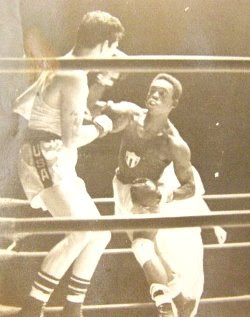
Orlando Martinez (-54 kg), who has already fought in Mexico, wins on points against Zamora/Mexico in the finals and get the gold medal. Martinez will fight at the 1976 OG. He has a record of 326 fights, with 23 defeats. He is the first Cuban boxer to receive an Olympic gold medal.
Orlando Martinez (-54 kg), who has already fought in Mexico, wins on points against Zamora/Mexico in the finals and get the gold medal. Martinez will fight at the 1976 OG. He has a record of 326 fights, with 23 defeats. He is the first Cuban boxer to receive an Olympic gold medal.


Orlando Martinez, black shirt, against Zamora
Emilio Correa (-71kg) def Gunther Meier/West Germany (bronze medal in 1968), via TKO in the 2nd, during the 1/4 finals, before beating the Hungarian Janos Kajdi in the finals, by 5-0. Emilio Correa, father of the current Olympic champion with the same name, will participate at the Olympic 1976.

Emilio Correa Sr
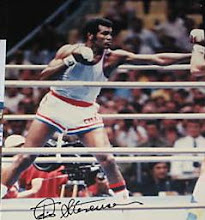
Teofilo Stevenson (+81 kg), receives his first Olympic medal in a series of 3. His story is detailed in the article devoted to him in this blog. An excerpt from his fight in the semi-finals against the West German Peter Hussing : http://www.youtube.com/watch?v=PwsKncVbuLg
Comparison with other teams :
For the first time, Cuba becomes the first team in Olympic boxing, with 5 medals. The Soviet Union finishes 2nd with 2 gold medals. The U.S. is only 6th, with 1 gold and 3 bronze. Note that the US Team is particularly weak, in comparison with his 2nd place in 1968 and his 1st place in 1976.
For 40 fights, Cuba has 31 wins and 9 defeats, with a wins ratio of 77.5 %.
Cuba wins 2 fights to 0 against the Soviet Union and wins 2 fights with 2 defeats against the USA.
After the Olympic Games :
At the Central American and Caribbean Championships, held in San-Jose/Costa-Rica in November 1972, Cuba wins 6 gold medals and 3 silver medals. Alberto Brea, Victor Corona, Daniel Ferrer may be from a second level team, but the presence of Teofilo Stevenson, Gilberto Carrillo, Alejandro Montoya, Orlando Martinez and Rolando Garbey shows that the Olympic team is still there. Only two Munich medalists are not present, Douglas Rodriguez and Emilio Correa.
Conclusions :
Munich is the beginning of the Cuban hegemony on the world amateur boxing, with the emergence of an idol, Teofilo Stevenson. It took almost 12 years for the Castro island to become the best boxing nation of the world.
Comparison with other teams :
For the first time, Cuba becomes the first team in Olympic boxing, with 5 medals. The Soviet Union finishes 2nd with 2 gold medals. The U.S. is only 6th, with 1 gold and 3 bronze. Note that the US Team is particularly weak, in comparison with his 2nd place in 1968 and his 1st place in 1976.
For 40 fights, Cuba has 31 wins and 9 defeats, with a wins ratio of 77.5 %.
Cuba wins 2 fights to 0 against the Soviet Union and wins 2 fights with 2 defeats against the USA.
After the Olympic Games :
At the Central American and Caribbean Championships, held in San-Jose/Costa-Rica in November 1972, Cuba wins 6 gold medals and 3 silver medals. Alberto Brea, Victor Corona, Daniel Ferrer may be from a second level team, but the presence of Teofilo Stevenson, Gilberto Carrillo, Alejandro Montoya, Orlando Martinez and Rolando Garbey shows that the Olympic team is still there. Only two Munich medalists are not present, Douglas Rodriguez and Emilio Correa.
Conclusions :
Munich is the beginning of the Cuban hegemony on the world amateur boxing, with the emergence of an idol, Teofilo Stevenson. It took almost 12 years for the Castro island to become the best boxing nation of the world.